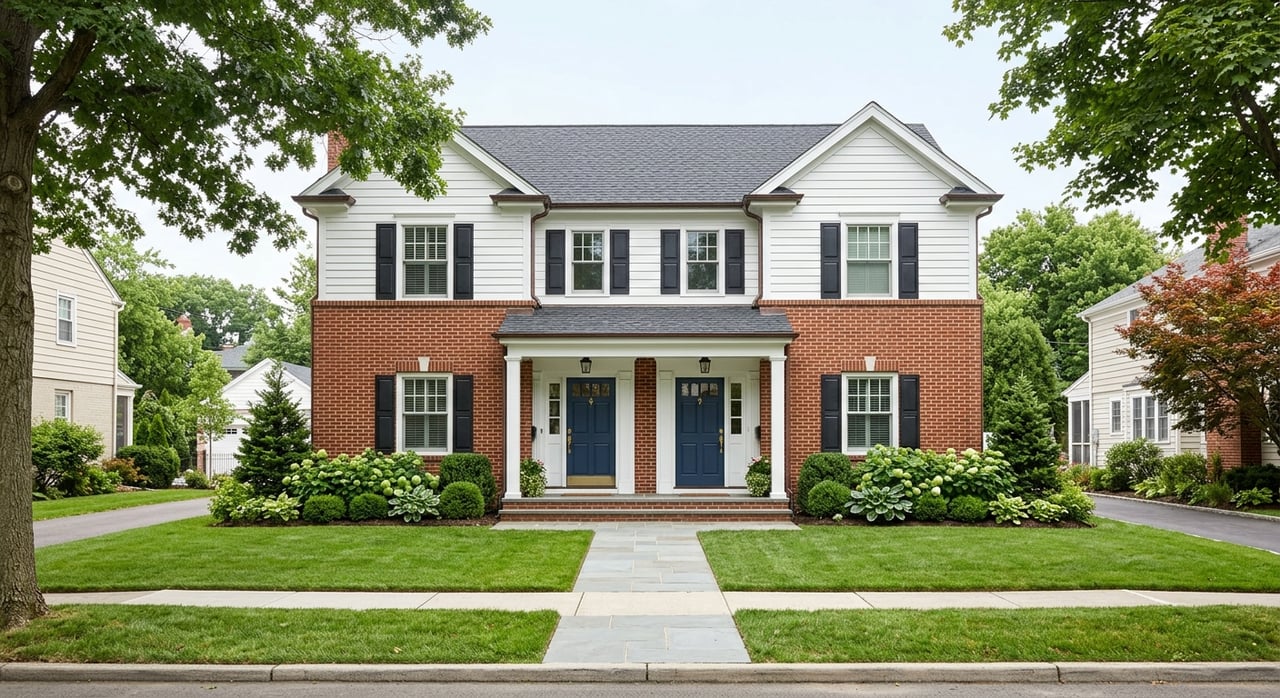
Wondering if a duplex, triplex, or four-unit property in Orange County could be your next smart move? You are not alone. Small multifamily homes can offer a mix of rental income, long-term appreciation potential, and flexibility, but in Orange County, NY, the opportunity comes with a need for careful local research. This guide will help you understand where the inventory tends to be, how to think about rents and expenses, and which compliance issues deserve your attention before you buy. Let’s dive in.
Why Orange County draws small investors
Orange County gives you a mix that many investors like to see: a large housing market, active listings, and a meaningful share of small multifamily housing. The county has 417,669 residents, 154,492 housing units, and a 67.8% owner-occupied housing rate based on 2020 to 2024 ACS data. In May 2026, Zillow reported 1,127 homes for sale and a median 38 days to pending, which points to an active acquisition environment.
That said, this is not a market where every property will naturally cash flow. Orange County looks more like a selective-value market than an easy-win market. Your success often depends on buying the right building, in the right area, with realistic rent assumptions and a clear repair plan.
Where small multifamily stock is concentrated
If you are searching for 2 to 4 unit properties, location matters a lot. Orange County’s latest Consolidated Plan says 12% of the county’s residential properties are in 2 to 4 unit buildings. That means small multifamily is an important part of the housing stock, but it is not evenly spread across the county.
The same county report shows that multifamily housing has the highest share in Newburgh, Middletown, and Port Jervis. By contrast, towns such as Crawford, Mount Hope, Deerpark, Greenville, and Hamptonburgh each have less than 10% multifamily share. In practical terms, that means your duplex or triplex search is more likely to produce options in older city areas and mixed-density corridors than in lower-density outer towns.
What that means for your search
If you are hoping to find a steady stream of small multifamily listings everywhere in Orange County, you may be disappointed. Inventory is more concentrated in specific municipalities, and that can shape both your purchase strategy and your rent strategy.
It also means hyper-local analysis matters. Two properties in the same county can have very different rent potential, repair needs, and tenant demand depending on the block, unit mix, and building age.
Older housing stock changes the math
One of the biggest themes in Orange County small multifamily investing is age. The county reports that 26% of housing units were built before 1950, and another 36% were built between 1950 and 1979. Among renter-occupied units, 34% are pre-1950 and another 34% were built from 1950 to 1979.
Older buildings can create opportunity, but they also tend to bring more maintenance and capital expense pressure. The county specifically notes that the age of the housing stock contributes to rehabilitation need, especially in the rental market. In plain language, that means your purchase price is only part of the story.
Repairs and reserves matter more here
A property that looks attractive on paper can become far less appealing if you underestimate ongoing costs. Roofs, windows, plumbing, electrical updates, common areas, and unit turns can all affect returns.
For many buyers, the real skill in Orange County is not just finding a listed duplex or triplex. It is identifying a property where the expected income supports both normal operating costs and the likely capital needs of an older building.
How to benchmark rents the right way
Rent research is one of the most important parts of underwriting a small multifamily deal. In Orange County, it helps to use two different reference points and understand what each one actually tells you.
Zillow reported an average asking rent of $2,233 in May 2026 for Orange County. That figure gives you a snapshot of active asking rents, which can be useful for seeing what current listings are trying to achieve. But it does not tell you what every tenant is actually paying in signed leases.
HUD’s FY2026 fair market rents for the Kiryas Joel-Poughkeepsie-Newburgh metro area provide another benchmark: $1,549 for a one-bedroom, $1,979 for a two-bedroom, $2,511 for a three-bedroom, and $2,694 for a four-bedroom. These numbers can help you compare rents by bedroom count, but they are program benchmarks, not substitutes for local comparable rentals.
A simple way to use both data points
Think of Zillow asking rent as a live market signal and HUD fair market rent as a bedroom-specific reference point. Neither one should replace local rent comps for the exact property type, layout, and condition you are considering.
If you are evaluating a three-unit property, for example, you will want to compare each unit to similar nearby rentals by size and condition. A renovated two-bedroom in one part of Newburgh may perform very differently from an older two-bedroom in another area or in a different municipality altogether.
Underwriting small multifamily in Orange County
A quick back-of-the-envelope estimate can help you screen deals, but it should never be the end of the analysis. Orange County’s market rewards careful underwriting because older housing stock and operating costs can quickly change your projected return.
A useful underwriting checklist should include:
- Expected market rent by unit size
- Vacancy allowance
- Management fees
- Repairs and maintenance
- Capital reserves
- Insurance
- Property taxes
- Debt service
One more data point is worth keeping in mind. Based on the research provided, the county’s average asking rent is about 28% of median monthly household income before utilities. That can be a helpful affordability signal, but it is not a full underwriting model and should not be treated as one.
Owner-occupant multifamily can offer flexibility
If you plan to live in one unit and rent the others, a small multifamily home may offer a different path into investing. Freddie Mac says its 2 to 4 unit mortgage products are for owner-occupied primary residences and may allow rental income from the other units to be counted toward your debt-to-income ratio. Fannie Mae also purchases or securitizes first-lien mortgages secured by residential properties consisting of one to four units.
For some buyers, that can make a duplex, triplex, or fourplex more realistic than buying a purely investment property first. You get the benefit of owner occupancy while also building experience as a landlord on a smaller scale.
Why this approach appeals to first-time investors
House hacking is not the right fit for everyone, but it can be a practical entry point. You live on-site, learn the day-to-day side of rental ownership, and may offset part of your housing cost with rent from other units.
In a market like Orange County, that strategy can be especially appealing when purchase prices and repair budgets require a disciplined approach. It lets you start smaller while still building an income-producing asset.
Legal issues to review before you buy
Small multifamily investing is not just about income and expenses. In New York, compliance matters, and local rules can affect how you operate the property after closing.
The New York Attorney General says security deposits are capped at one month’s rent. For non-regulated units, the Residential Tenants’ Rights Guide says the deposit must be returned within 14 days after move-out.
The Attorney General also notes that landlord-tenant laws can vary by county or town. Its current Good Cause Eviction list includes Newburgh, which is an important reminder not to assume a rule applies countywide just because it applies in one municipality.
Fair housing still needs close attention
Orange County’s fair housing page says most housing is covered by the Fair Housing Act and the New York Human Rights Law, with limited exemptions in certain owner-occupied situations. For an investor-owned duplex or triplex, the safest assumption is that fair housing rules apply unless a specific exemption clearly matches the facts.
That means your marketing, screening, and leasing practices should be consistent, neutral, and compliant. It is one more reason to take operations seriously from day one.
Lead paint and older-building risk
Because so much of Orange County’s housing stock predates 1980, lead paint is a recurring issue for small multifamily buyers. The federal Lead-Based Paint Disclosure Rule applies to most pre-1978 housing. Before sale or lease, sellers, landlords, property managers, and real estate agents must disclose known lead-based paint hazards and provide the required warning statement and pamphlet.
If you plan renovations in pre-1978 housing, lead-safe work requirements can also come into play. This is not a small detail. It affects your due diligence, renovation planning, and turnover process.
Why property management vetting matters
Not every investor wants to self-manage, and not every investor should. If you plan to hire help, New York’s Department of State says that anyone who, for a fee, negotiates rentals or collects rent on behalf of another generally needs a real estate broker license.
That makes manager vetting especially important. You want to understand who will handle leasing, rent collection, and day-to-day issues, and whether they are properly positioned to do that work.
What a smart buying strategy looks like
In Orange County, small multifamily investing is less about chasing a generic “good deal” and more about matching the property to a realistic plan. The strongest opportunities often come from combining local rent comps, building-condition analysis, and municipal-level rule checks before you commit.
A smart buying strategy usually includes:
- Focusing your search where 2 to 4 unit stock is more common
- Verifying rents by unit type, condition, and exact area
- Budgeting for repairs and future capital costs
- Checking local landlord-tenant rules at the municipal level
- Reviewing lead disclosure and renovation obligations for older buildings
- Vetting property management resources carefully
Why local guidance can make a difference
When you are buying a small multifamily home, broad county data is only the starting point. What really drives the decision is property-level detail: current rents, likely market rents, unit condition, layout, taxes, and how the building fits the block and municipality.
That is where strong local guidance matters. A team with experience in Orange County multifamily and cross-market exposure can help you compare opportunities, pressure-test assumptions, and move forward with clearer expectations.
If you are exploring duplexes, triplexes, or four-unit properties in Orange County, working with a team that understands both the numbers and the neighborhood-level differences can save you time and help you make a more confident decision. When you are ready to talk strategy, connect with The Ramundo Team.
FAQs
What makes Orange County, NY attractive for small multifamily investing?
- Orange County offers active housing inventory, a meaningful share of 2 to 4 unit properties, and rent levels that can support careful investors, but it is best approached as a selective-value market that requires strong due diligence.
Where are duplexes and triplexes more common in Orange County, NY?
- Based on the county’s Consolidated Plan, small multifamily housing is more concentrated in Newburgh, Middletown, and Port Jervis than in lower-density towns such as Crawford, Mount Hope, Deerpark, Greenville, and Hamptonburgh.
How should you estimate rent for an Orange County multifamily property?
- Start with local comparable rentals for similar unit sizes and condition, then use Zillow asking rents as a live market signal and HUD fair market rents as a bedroom-specific benchmark rather than a direct pricing tool.
What expenses should you include when underwriting a small multifamily home in Orange County?
- At a minimum, include market rent assumptions, vacancy, management fees, repairs and maintenance, capital reserves, insurance, property taxes, and debt service.
What should owner-occupant buyers know about 2 to 4 unit homes in Orange County?
- Owner-occupant buyers may have financing options that allow rental income from other units to count toward debt-to-income calculations, which can make a duplex, triplex, or four-unit property more accessible.
What legal issues matter when buying a small multifamily property in Orange County, NY?
- Key issues include New York security deposit rules, municipality-specific landlord-tenant regulations, fair housing compliance, lead-based paint disclosure for most pre-1978 homes, and proper vetting of any property manager handling rentals or rent collection.